Over the previous 20 years, numerous American print media have shrunk or disappeared, leaving many people resigned to stories of latest company consolidation or the non-public fairness takeover of a well-liked publication.
Though I sadly depend myself among the many dulled, a Twenty first-century precursor to the fourth property erosion nonetheless has a particular sting – and necessary classes for our time.
In June 1996, Michael Lacey and Jim Larkin strutted right into a small newsroom in West Los Angeles the place a gaggle of journalists had gathered to present their newspaper a full of life wake. Beginning in Arizona within the Seventies, the 2 males had constructed the biggest chain of different weeklies in the US by means of a sequence of aggressive acquisitions. Though the New Instances founders half-heartedly tried to lipstick a pig with assurances of their intentions, the employees’s worst fears had been quickly confirmed.
Whereas the alternate media wars in LA 1 / 4 of a century in the past are largely forgotten, they nonetheless resonate with a metropolis whose media panorama has by no means absolutely recovered.
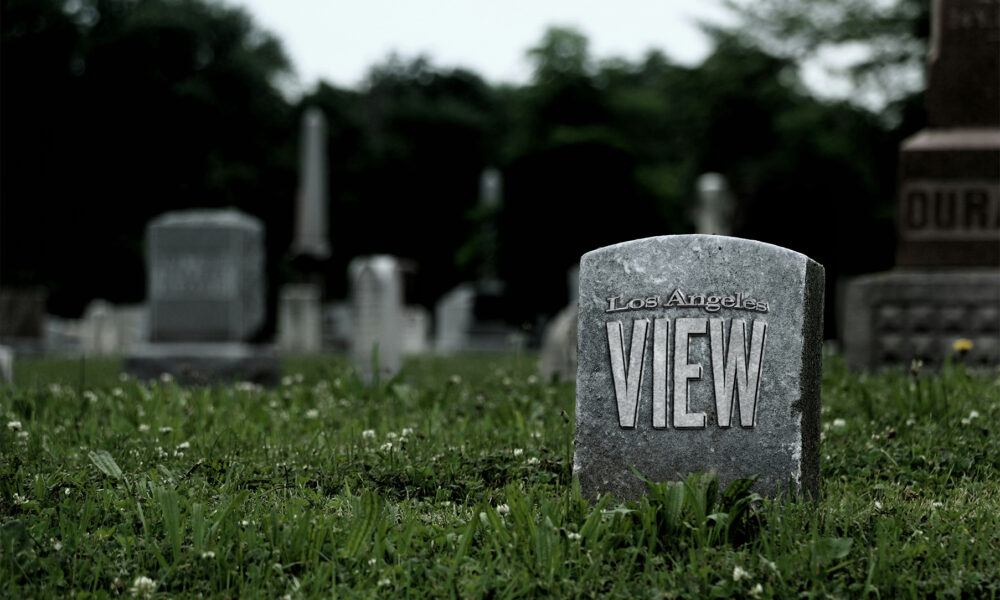
The Los Angeles View, a rising pressure within the metropolis’s media panorama who printed groundbreaking protection of the whole lot from the Zapatista Rise up and Los Angeles Riots in 1992 to the Southland movie, music and theater scenes, had been bought. The brand new house owners instantly fired three of the newspaper’s prime editors, me included; Inside a couple of months, they fired most of View’s remaining workers and closed the newspaper.
The identical destiny befell Los Angeles Reader, one other pillar of LA’s then sturdy various press and the primary newspaper to publish Life in Hell, the cartoon that began the profession of Matt Groening who later made The Simpsons.
This paved the best way for Lacey and Larkin to compete in opposition to LA Weekly, probably the most influential various weeklies within the nation. In its prime, the Weekly printed huge tales together with the primary Grim Sleeper investigation, produced a few of the greatest arts and tradition journalists on the West Coast, and competed with the LA Instances for protection of Metropolis Corridor. It additionally printed definitive stories on pioneering political and social actions that in any other case wouldn’t have stayed chronological. A lot of his high-profile columnists had been well-known names, whose works properly price studying flew from the newsstands in America’s largest city sprawl.
With inequality rampant in LA, police brutality in opposition to coloured communities, and an more and more extreme disaster of inexpensive housing and homelessness, the necessity for extra and higher journalism is as pressing as ever.
The choice media wars in LA 1 / 4 of a century in the past could have been largely forgotten, however they nonetheless resonate not solely with these of us who lived by means of them, but in addition with a metropolis whose media panorama has by no means absolutely recovered. The demise of the choice press within the nation’s second largest metropolis has taken a heavy toll, robbing Angelenos of the information, narrative and evaluation which might be usually missing in mainstream media. Whereas many various weeklies have disappeared throughout the nation, the affect right here has been notably noteworthy.
The dwindling press in Los Angeles has resulted in much less accountability from governments and companies, not to mention much less journalistic storytellers stating the area’s wealthy civic and cultural life. Right this moment, as Southland faces rampant inequality exacerbated by the pandemic, police brutality in opposition to coloration communities, and an more and more extreme disaster of inexpensive housing and homelessness, the necessity for extra and higher journalism is as pressing as ever.
In 1996, earlier than the New Instances declared warfare on LA Weekly to grow to be the area’s dominant various publication, the town’s thriving various newspapers served as a counterbalance to the Los Angeles Instances and different mainstream media. Extra progressive and hostile of their political reporting and much more daring of their reporting on artwork and tradition, these publications anticipated the event of our metropolis right into a extra numerous, tolerant and future-oriented place than it had ever imagined.
Right this moment, LA’s legendary various press is totally on yellowing paper from a pre-digital period. Unable to compete with LA Weekly, which had each superior content material and stronger engagement with its readers, the New Instances closed Los Angeles in 2002, shedding about 100 workers.
However Lacey and Larkin struck once more three years later by shopping for Weekly’s guardian firm, Village Voice Media. That win, nonetheless, turned out to be pyrrhic – in 2012 the 2 males bought Village Voice Media and in 2017 a closely discounted LA Weekly was purchased by a seedy group of consumers who instantly fired virtually the entire remaining editorial employees and put them in a cultural publication with little sense of journalistic accountability.
The discharge’s sluggish loss of life spiral continues to at the present time, till many Angelenos surprise if the Weekly nonetheless exists. In 2018, Lacey and Larkin had been arrested and charged for facilitating prostitution and cash laundering by means of their possession of the notorious Backpage, whose profitable adverts featured scantily clad girls and allegedly underage ladies. They’re as a result of be tried in the summertime.
Within the first decade of this century, some posh startups like LA Metropolis Beat and LA Various Press tried to revive the area’s various press, however none survived because the Web devalued each conventional print promoting and the labeled fashions that had supported each mainstream newspapers and various publications for many years.
The collapse of the town’s various weeklies was solely magnified by the epic curler coaster journey of the LA Instances, whose change of possession, editorial battles, and downsizing sparked an existential disaster for the area’s flagship.
That disaster has subsided in the meanwhile, with new house owners reinvesting within the newspaper and an lively employees forming the primary union within the publication’s 140-year historical past, all whereas settling down on the Instances’ therapy of coloured journalists and protection by the Instances is required.
However the nation’s most populous district stays underserved by a diminished press corps that’s nonetheless affected by the lack of a as soon as proud array of different newspapers.
Collectively, LA Weekly, Los Angeles View, and Los Angeles Reader shaped a mirror centered on a future very completely different from Southland, as soon as dominated by the all-white, all-male Committee of 25.
These sufficiently old to recollect will keep in mind the verses by Michael Ventura, Harold Meyerson, Erin Aubry Kaplan, Ella Taylor, Alex Demyanenko, Steven Mikulan, Rubén Martínez, Lynell George, Mike Davis, Joe Domanick, David Mermelstein , Bob Remstein, Lionel Rolfe Ginger Varney, Craig Lee, Judith Lewis Mernit, Richard Meltzer, Steven Leigh Morris, Elvis Mitchell, Jonathan Gold, Christine Pelisek, Natalie Nichols, Eddie Rivera, RJ Smith, Mary Melton, Greg Burk, Ed Leibowitz, Robin Podolsky, Ernest Hardy, Rick Schultz and Steve Erickson.
These writers and lots of others graced the pages of the LA various press for many years, starting within the late Seventies once they recorded the life and instances of a metropolis remodeled from the lengthy shadows of their East Coast and Midwestern counterparts into one huge cosmopolitan metropolis.
Collectively, LA Weekly, Los Angeles View, and Los Angeles Reader shaped a mirror centered on a future very completely different from Southland, as soon as dominated by the all-white, all-male Committee of 25, a gaggle of enterprise leaders who wielded outsized management over the town for many years.
In recent times LA has spawned some new various publications worthy of the town’s wealthy journalistic line: LA Taco, Crimson Canary Journal, WitnessLA, Los Angeles Evaluation of Books. (Even the legendary Los Angeles Free Press, one of many nation’s first various weeklies in 1964, is attempting to rise from the ashes.) These and different digital media have begun to revive LA’s lengthy custom of stressed, pressing, and risk-taking various media.
This fragile renaissance is the hopeful continuation of a narrative whose protagonists embody one of the best qualities of America’s second probability metropolis.
Danny Feingold was the senior editor of Los Angeles View and is the founder and writer of Capital & Most important.